- English
- Español
- Português
- русский
- Français
- 日本語
- Deutsch
- tiếng Việt
- Italiano
- Nederlands
- ภาษาไทย
- Polski
- 한국어
- Svenska
- magyar
- Malay
- বাংলা ভাষার
- Dansk
- Suomi
- हिन्दी
- Pilipino
- Türkçe
- Gaeilge
- العربية
- Indonesia
- Norsk
- تمل
- český
- ελληνικά
- український
- Javanese
- فارسی
- தமிழ்
- తెలుగు
- नेपाली
- Burmese
- български
- ລາວ
- Latine
- Қазақша
- Euskal
- Azərbaycan
- Slovenský jazyk
- Македонски
- Lietuvos
- Eesti Keel
- Română
- Slovenski
- मराठी
- Srpski језик

ENGINEER TALKS Ep.14: Marine Pipe & Rail Hardware Under Load – Bimini Fittings, Stanchions & 316SS Casting
At Andy Marine, we believe that practical manufacturing knowledge is one of the most valuable assets built over time.
Inside our workshop, engineers, casting specialists, and tooling technicians work daily with stainless steel marine pipe systems — from investment casting and CNC boring to deck assembly forensics. Many critical insights are learned directly from field returns: understanding why a jaw slide slips along a bow, why a stamped rail elbow cracks under wave chop, and why an antenna base rocks loose on an offshore center console.
ENGINEER TALKS is our effort to share these shop-floor lessons with yacht builders, custom fabricators, and deck integration engineers.
Today's ENGINEER TALKS Ep.14 is presented by Engineer Zhang, written by me the editor.
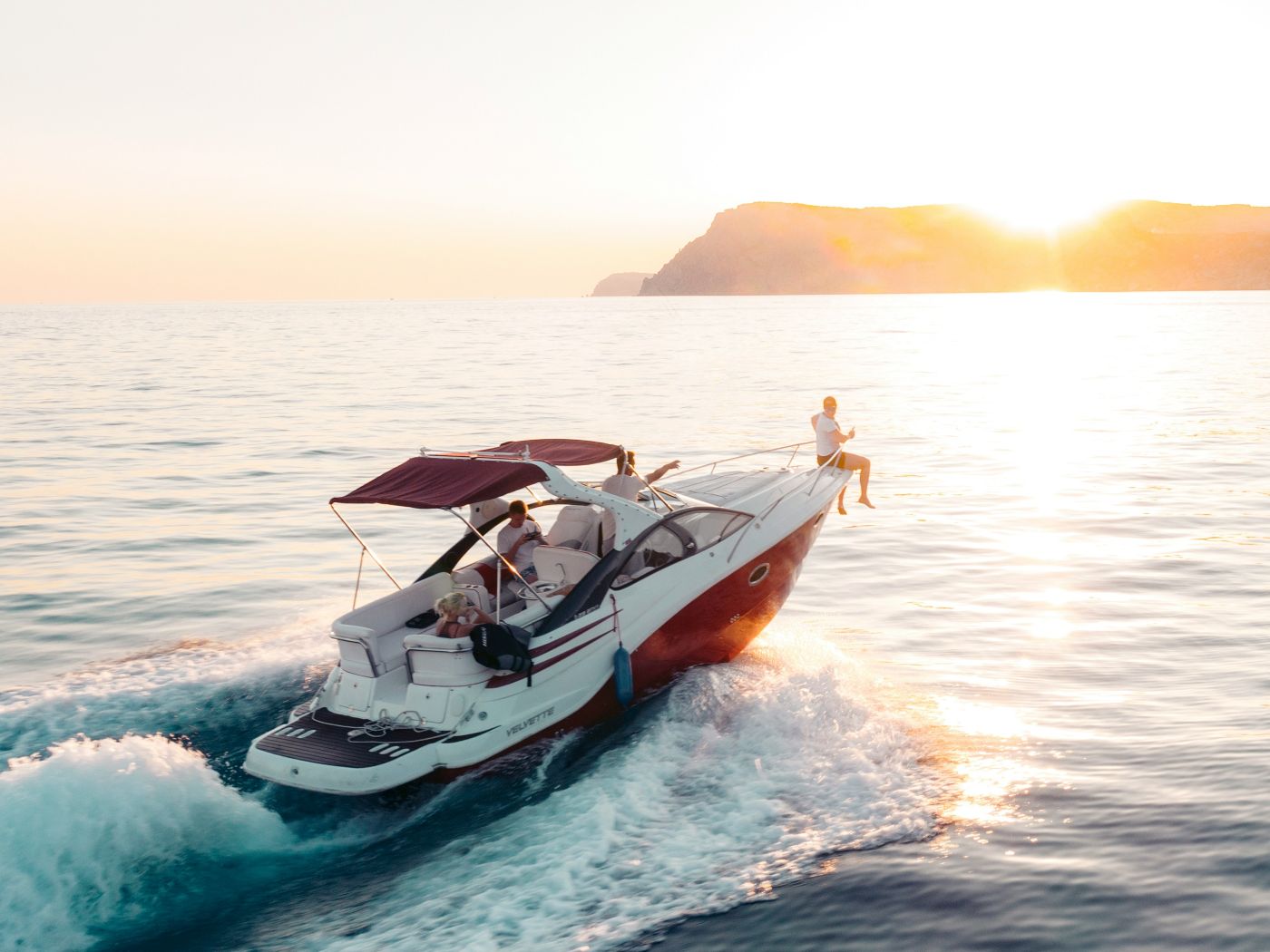
On powerboats, center consoles, and sailing yachts, tubular structures—such as Bimini tops, handrails, perimeter stanchions, and antenna mounts—are often misjudged as simple secondary deck trim.
In real sea conditions, however, they function as cantilevered spatial trusses subjected to continuous multi-axis dynamic loads. Failures on the water are rarely caused by a lack of raw tensile strength in 316 stainless steel. Instead, they almost always trace back to point-contact stress concentrations, micro-motion play, and high-cycle vibration fatigue.
This engineering guide examines how dynamic wind, wave, and inertia loads actually propagate through pipe networks, why precision investment casting outperforms stamped sheet metal in fatigue resistance, and what assembly disciplines prevent premature failures.
1. Bimini Load Paths: From Canvas Aerodynamics to Deck Anchors
A Bimini canopy acts as a flexible cambered membrane exposed to dynamic airflow. Depending on vessel speed and trim, asymmetric pressure differentials across the upper and lower canvas surfaces generate continuous aerodynamic drag and fluctuating vertical loads, driving high-frequency canvas flutter down the frame.
This aerodynamic energy flows through three primary hardware nodes:
- Top Caps & Eye Ends (Tension & Shear): The eye end converts dynamic frame forces into concentrated shear and tensile loads across a single pivot pin, while resisting out-of-plane prying. In low-cost fittings with thin lug walls, cyclic fluttering elongates the pin bore into an oval shape over time. Once mechanical play develops, dynamic shock loads multiply rapidly, leading to sheared pivot pins or lug tear-out.
- Jaw Slides (Strut Shear & Clamping Friction): Jaw slides anchor secondary support struts to the main canopy frame. Standard cup-point set screws provide point-contact friction, which easily indents the tube surface and walks loose under vibration. For primary load-bearing struts, applying an anaerobic thread-locking compound to prevent back-out and drilling a through-pin provides positive mechanical shear resistance against sliding.
- Deck Hinges (Compound Overturning Forces): Deck hinges anchor the entire frame to the hull, absorbing combined vertical uplift and lateral prying forces as the vessel rolls. Quick-release drop-cam hinges offer convenience, but loose machining tolerances between the drop-pin and bracket allow micro-fretting, wearing down the passive chromium-oxide layer and accelerating pin fatigue.
2. Stanchions & Pipe Railings: Managing the Cantilever Lever-Arm
Perimeter stanchions and grab rails face a constant mechanical challenge: the cantilever lever-arm effect. A 24-to-30-inch upright stanchion creates a long cantilever lever-arm. Lateral forces applied at the top rail generate a severe overturning moment at the deck flange, concentrating high tensile pull-out stresses on the outer fasteners and compressive loads on the base edge.
- 90° Rail Elbows (Internal Fillet Geometry): When an outward force pushes against a corner rail, the elbow experiences high outer-curve tension and sharp inner-corner compression. Fittings with sharp internal transitions act as stress risers. High-integrity rail elbows must incorporate generous internal fillet radii that smoothly dissipate peak bending stresses into the tubular sections.
- Universal Tees & Cross Connectors (Torsional Stability): T-connectors resist off-axis rotational twisting. If the internal bore lacks sufficient depth or cylindrical precision, the tube rocks against the casting lip, causing localized galling, crevice corrosion, and eventual tube cracking.
- Fixed vs. Adjustable Stanchion Bases: One-piece cast fixed bases (60°/90°) provide maximum rigidity through a broad fastener footprint. Adjustable bases accommodate complex deck rakes via radial locking teeth, but require deep, sharp tooth definition and high clamping torque to prevent slip under heavy dynamic lateral loads.
3. Manufacturing DFM: Precision Investment Casting vs. Stamped Fittings
The structural reliability of marine pipe hardware is largely determined in the foundry and machine shop. Fittings generally fall into two manufacturing categories: silica sol investment castings (Grade 316 / CF8M) and stamped/formed sheet metal fabrications.
| Feature / Parameter | Silica Sol Investment Casting (CF8M) | Stamped & Formed Sheet Metal |
|---|---|---|
| Wall Thickness Geometry | Engineered variable thickness; reinforced hubs and smooth fillet transitions | Uniform thin gauge; wall thinning and stretching at drawn corners |
| Fatigue Crack Resistance | High fatigue limit; continuous grain structure disperses cyclic stress | Residual tensile stress and cold work hardening promote micro-cracks |
| Internal Bore Fitment | Precision CNC-bored cavity; provides broad, uniform surface support on tube OD | Springback profile; pinches tube along narrow contact ridges with gap voids |
| Corrosion Resistance | Solid-solution annealed & electropolished (ASTM B912); intact passive film | Cold-worked grain distortion increases risk of stress-corrosion cracking |
For technical specifications, dimensional drawings, and CAD models of precision-cast 316 marine pipe fittings: VIEW RAIL FITTINGS →
4. Antenna Mounts & Deck Rigidity: The Backing Plate Mandate
An 8-foot or 16-foot whip antenna acts as a high-aspect-ratio harmonic pendulum. At cruising speeds, engine vibration and wave slamming induce rapid resonance at the antenna tip ("whip effect"), generating high-frequency alternating bending moments and dynamic rocking loads on a compact base footprint.
Preventing antenna base loosening and deck damage requires addressing two interface points:
- Ratchet Tooth Wear: Cyclic overturning loads cause microscopic fretting slip between the ratchet teeth. Once teeth round off, the locking handle loosens, causing the antenna to suddenly flop under high-speed running. High-precision cast locking teeth are mandatory.
- Deck Substrate Flexing: Mounting an antenna base directly to unreinforced fiberglass causes the laminate to flex elastically. This concentrated prying force crushes gelcoat and leads to internal core delamination. Hardware cannot compensate for an elastic deck.
- The Backing Plate Solution: Install a dedicated 316 stainless steel or composite backing plate beneath the deck to spread overturning moments across a broad surface area. Secure through-bolts with nylon-insert locknuts (Nyloc) to prevent vibration back-off.
5. Practical Shop Wisdom: Three Installation Rules
For deck riggers, custom fabricators, and boatyard technicians, preventing hardware warranty claims comes down to three disciplined rules:
- 1. Control Fitment Clearances (Minimize Mechanical Play): While pivot hinges require controlled running clearance to prevent galling, excessive play between tube sockets, eye ends, and pins must be eliminated. Under wind flutter, uncontrolled clearance converts vibration into repeated shock impacts, accelerating pin bore elongation and fatigue wear.
- 2. Employ Positive Mechanical Fastening: On primary load-bearing bows and heavy struts, do not rely solely on set-screw friction. Apply anaerobic thread-locking compounds to prevent fastener back-out, and install through-pins or through-bolts to provide positive mechanical shear against tube slip.
- 3. Distribute Bending Loads & Protect Core Integrity: Hardware strength is limited by the deck underneath. For stanchions, Bimini hinges, and antenna mounts, ensure the deck substrate can support the clamping load (using solid backing plates and compression-resistant core inserts or epoxy potting where applicable) to distribute overturning moments across a broad laminate surface.
Custom Marine Hardware Engineering and OEM Manufacturing
Andy Marine provides OEM/ODM manufacturing of precision 316 stainless steel pipe fittings, Bimini hardware, and custom deck stanchions for boatbuilders and marine distributors worldwide.
From DFM casting optimization to precision CNC boring, electropolishing, and batch spectrographic verification, our engineering team ensures every fitting delivers reliable fitment and long-term fatigue resistance on the water.