- English
- Español
- Português
- русский
- Français
- 日本語
- Deutsch
- tiếng Việt
- Italiano
- Nederlands
- ภาษาไทย
- Polski
- 한국어
- Svenska
- magyar
- Malay
- বাংলা ভাষার
- Dansk
- Suomi
- हिन्दी
- Pilipino
- Türkçe
- Gaeilge
- العربية
- Indonesia
- Norsk
- تمل
- český
- ελληνικά
- український
- Javanese
- فارسی
- தமிழ்
- తెలుగు
- नेपाली
- Burmese
- български
- ລາວ
- Latine
- Қазақша
- Euskal
- Azərbaycan
- Slovenský jazyk
- Македонски
- Lietuvos
- Eesti Keel
- Română
- Slovenski
- मराठी
- Srpski језик

ENGINEER TALKS Ep.08 Bent Butt vs. Straight Butt Rod Holders: Flush Mount Angles & Heavy Trolling
At Andy Marine, we believe that practical manufacturing knowledge is one of the most valuable assets built over time.
Inside our workshop, there are engineers, production specialists, and experienced technicians who have spent years working with stainless steel marine hardware — from material selection and casting processes to finishing and quality control.
Many of these insights are learned through daily production experience: understanding why a component fails, how different materials perform in marine environments, and what details truly matter when developing reliable hardware.
However, this practical knowledge is often shared only within the workshop and rarely reaches customers who are making sourcing and engineering decisions.
ENGINEER TALKS is our effort to organize these conversations and share the manufacturing experience behind marine hardware.
Through this series, we discuss materials, production processes, design considerations, and real-world lessons from the perspective of a marine hardware manufacturer.
Today's ENGINEER TALKS Ep.08 is presented by fishing enthusiast Engineer Zhang, written by me the editor.
In offshore sportfishing, stepping up to heavy 80 lb or 130 lb class tackle with bent butt rods introduces severe dynamic forces that standard deck hardware was never designed to endure.
A frequent mistake observed across boatyards and custom rigging shops is dropping a bent butt rod directly into a standard 30° flush mount rod holder. The resulting geometric mismatch angles the rod tip dangerously low toward the water, imposes severe off-axis torsional shear on the gimbal pin, and can trigger gelcoat spider cracking, tube weld fatigue, or bent butt ferrule damage under high strike drag.
From our manufacturing and workshop experience at Andy Marine, matching rod butt geometry—bent butt versus straight butt—with the correct flush mount angle (0°, 15°, or 30°) and base mechanism (fixed pin vs. 360° swivel) is a fundamental engineering requirement. Marine-grade 316 stainless steel provides the material baseline, but mechanical lever arm management, one-piece investment casting integrity, and robust deck backing plate systems determine long-term reliability on the water.
This guide examines the mechanical physics, metallurgical standards, and installation protocols required to match rod butt geometries with offshore deck hardware.
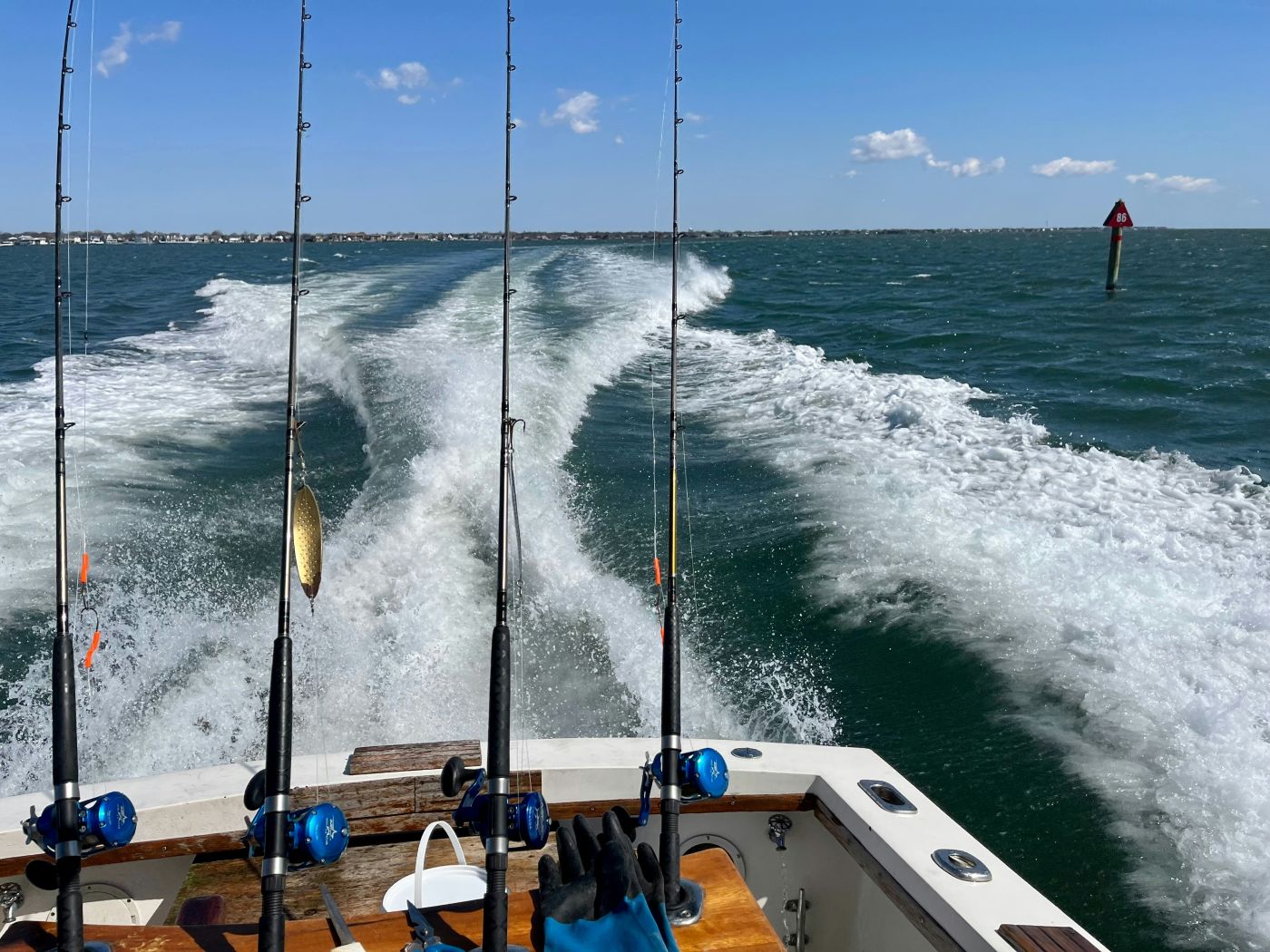
1. Lever Arm Mechanics: Straight Butt vs. Bent Butt Load Vectors
The mechanical divergence between straight butt and bent butt rods comes down to load transfer geometry. When a pelagic gamefish strikes a trolled lure or bait under heavy drag, the rod acts as a rigid lever arm, converting line tension into severe bending moments and torsional forces at the deck flange.
In a conventional straight butt rod, the centerline of the rod blank aligns directly with the tube axis. When seated in an angled holder (15° or 30°), the line pull creates a predictable upward and backward bending moment. The gimbal cross pin experiences symmetrical seating pressure, keeping the reel oriented securely upward.
Conversely, a bent butt rod incorporates an aluminum ferrule curved downward by approximately 20° to 25°. This angular offset lowers the center of gravity and reduces physical strain on anglers in fighting chairs or stand-up harnesses. However, when placed inside a standard 30° angled holder, that downward bend compounds the tube angle, creating an excessive cumulative angle (often 50° to 55° relative to the horizon).
This geometric mismatch introduces three distinct mechanical failure risks:
- Wave Strike & Tip Submergence: The low rod trajectory brings the tip dangerously close to breaking swells during heavy boat rolls, risking broken rod blanks under water drag.
- Asymmetrical Torsional Shear: When a hooked fish runs broadside to the vessel, the offset angle acts as a torque wrench against the gimbal cross pin, inducing severe rotational shear that can twist or shear the pin.
- Deck Core Compression: The forward edge of the top flange acts as a mechanical fulcrum, concentrating high compressive point loads that crush un-potted deck cores and spider-crack the surrounding gelcoat.
2. Angle Selection Engineering: 0° vs. 15° vs. 30° Flush Mount Dynamics
Flush mount rod holders are manufactured in three standardized angles: 0° (vertical), 15°, and 30°. Selecting the appropriate angle is an engineering specification dictated by tackle class, spread geometry, and under-gunwale clearance:
- 0° Vertical Flush Mounts (Dedicated Bent Butt & Deep Drop): The downward curve of the bent butt ferrule provides the necessary working angle over the water while the holder tube remains perpendicular to the deck. This directs the majority of strike load into pure downward compression rather than cantilever bending, reducing flange stress and requiring minimum under-gunwale clearance depth compared to angled units.
- 15° Angled Flush Mounts (Flat-Line Trolling & Transom Mounts): Provides a shallow backward rake that keeps lure trajectories low under prop wash while maintaining adequate clearance for lines deployed under outriggers. Commonly specified for transom corners and downrigger mounts.
- 30° Angled Flush Mounts (Standard Offshore Outrigger Spreads): The engineering standard for straight butt trolling rods. The 30° backward rake elevates the rod tip high above the gunwale, maximizing line elevation and lure spread separation to prevent crossing during trolling turns.
3. The 360° Swivel Base Mechanism: Mitigating High-Torsional Shock Loads
When pelagic gamefish such as Bluefin Tuna, Swordfish, or Wahoo surge broadside to the vessel, fixed-angle rod holders endure severe lateral bending moments. In fixed holders, this side-load torque concentrates on the rod butt, reel seat, and gimbal pin, creating high shear stresses.
An engineered 360° swivel base integrates a rotating lower gimbal clutch within the cast 316 stainless steel tube. Precision-machined self-lubricating synthetic thrust washers (PTFE / Delrin) isolate the rotating components, preventing metal-to-metal galling under heavy downward thrust while allowing the rod to smoothly follow the line vector without manual intervention.
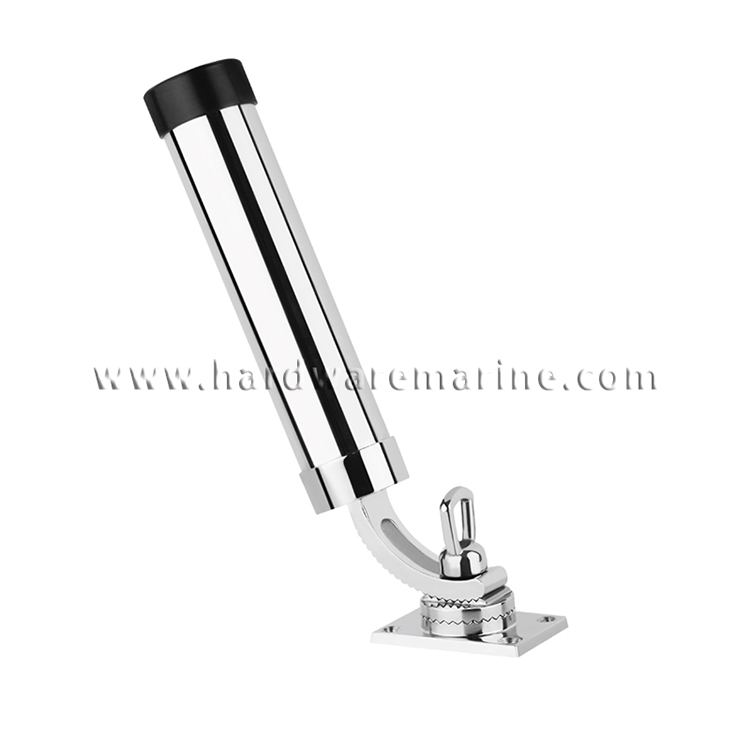
Stainless Steel 360 Degree Adjustable Fishing Rod Holder
Featuring an stainless steel body with an integrated 360° smooth-adjusting design, this holder eliminates lateral torque during deep drop electric reeling and heavy tackle bent butt trolling.
VIEW FISHING ROD HOLDERS →4. The 4 Pillars of Manufacturing: Foundry DFM, Shell Integrity & Backing Mechanics
A marine rod holder assembly is subject to severe cyclic fatigue. Looking behind the scenes at foundry production, quality control, and field installation reveals why industrial-grade hardware outperforms lightweight alternatives:
- 1. DFM & Investment Casting Integrity (Lost-Wax Feasibility): In two-piece welded rod holders—where a stamped top flange is joined to a thin drawn tube—the circumferential weld creates a localized Heat-Affected Zone (HAZ). During heavy trolling, the gunwale junction acts as a continuous cantilever pivot. Cyclic bending loads concentrate stress directly along the weld root, where altered grain boundaries are vulnerable to micro-crack initiation and crevice corrosion. In contrast, one-piece investment casting (CF8M / cast 316) allows for a smooth, continuous transition radius between the flange and tube wall. From a Design-for-Manufacturing (DFM) standpoint, casting a long, hollow tube with an integrated flange requires precise control over ceramic shell slurry coating to ensure uniform wall thickness, along with specialized tooling draft to allow clean wax pattern extraction. CNC internal bore honing is subsequently performed to eliminate parting line flash, ensuring an ultra-smooth bore that will not scratch expensive aluminum rod butts.
- 2. Foundry QC & Batch Consistency: Authentic marine durability begins with raw material verification. Spectrographic melt analysis confirms proper chemical composition for CF8M (2.0%–3.0% Molybdenum and 9.0%–12.0% Nickel), ensuring resistance to chloride pitting. Following casting, Coordinate Measuring Machine (CMM) inspections verify flange flatness, preventing rocking or gap-induced sealant failure on finished boat decks.
- 3. Cross-Pin Integrity & Notch Sensitivity: The gimbal cross pin at the tube base absorbs 100% of the rotational torque exerted by the rod butt. In budget assemblies, pins are often mechanically pressed into drilled holes or tacked with minimal spot welds. These drill penetrations create sharp notch stress risers in the thin tube wall. Under sudden high-torque strikes, the pin can bend or tear through the tube. Heavy-duty engineering requires a solid 316 cross pin machined from heavy-gauge bar stock with full 360° circumferential weld fusion and CNC radiused lead-in edges, preventing notch fatigue and protecting aluminum rod butt ferrules from mechanical galling.
-
4. Warranty Forensics & Deck Backing Plates: Lessons from boatyard warranty claims show that over 80% of premature gunwale failures do not stem from metal fracture, but from shipyard installation oversights. Fastening heavy-tackle rod holders with self-tapping screws or standard small washers causes severe point-loading. When heavy strike drag generates high cantilever bending moments at the flange, the forward edge acts as a fulcrum while the rear fasteners pull upward. Without a rigid, passivated 316 backing plate to distribute tensile loads across a wide deck footprint, localized core crushing leads to gelcoat spider cracking, broken sealant bonds, and progressive water ingress. Surface finishing completes the protection: automated electropolishing per
ASTM B912reduces micro-roughness ($R_a \le 0.4\,\mu\text{m}$), followed by chemical passivation perASTM A967and verified neutral salt spray testing (ASTM B117).
5. Rod Butt Geometry & Flush Mount Angle Mechanical Matching Matrix
| Tackle Configuration | Rod Butt Geometry | Angle | Base Mechanism | Required Backing System |
|---|---|---|---|---|
| Heavy Tuna / Marlin (80–130 lb) | Aluminum Bent Butt | 0° (Vertical) | 360° Swivel Base | Heavy Passivated 316 Backing Plate + Epoxy Potting |
| Deep Drop Electric (500–2000 ft) | Short Curved Bent Butt | 0° (Vertical) | 360° Swivel Base | Heavy 316 Plate with Through-Bolted Machine Screws |
| Outrigger Spread (30–50 lb) | Standard Straight Butt | 30° (Offshore Rake) | Fixed Gimbal Pin | Heavy Passivated 316 Backing Plate |
| Transom Flat-Line / Downrigger | Long Straight Butt | 15° (Shallow Rake) | Fixed Gimbal Pin | Heavy Passivated 316 Backing Plate |
6. Shipyard Installation Protocol for Cored Decks
To ensure structural deck strength matches hardware load capacity, shipyards should adhere to this standardized rigging protocol:
- Precision Angle Sawing: Cut clean 0°, 15°, or 30° openings through the gunwale deck using an angle-guided hole saw jig, chamfering the gelcoat edge to prevent chipping under load.
- Core Undercutting & Epoxy Potting: On cored composite decks, excavate several millimeters of foam or balsa core material around the hole perimeter. Fill the cavity with high-density structural marine epoxy to create an impermeable solid compression ring.
- Bedding & Backing Plate Torquing: Bed the cast flange with a continuous bead of elastomeric marine polyurethane sealant. Install a matching 316 backing plate below the gunwale and torque 316 machine screws with nylon-insert locknuts progressively in a cross-pattern to ensure uniform gasket compression.
Looking for Custom Marine Hardware Manufacturing?
Andy Marine is a stainless steel marine hardware manufacturer specializing in precision investment casting, CNC machining, and OEM/ODM solutions.
We provide engineering support, tooling development, material verification, and batch manufacturing for yacht builders, tournament riggers, and marine equipment distributors worldwide.
Contact our engineering team to discuss your project requirements and technical specifications.